Key Takeaways:
Xanax and Addiction Risk: Xanax (alprazolam) is a highly addictive benzodiazepine, commonly prescribed for anxiety, panic, and insomnia. Its fast-acting nature and short half-life make it especially prone to misuse and dependence.
Warning Signs & Withdrawal: People dependent on Xanax may show mood changes (like irritability, paranoia), social withdrawal, or doctor-shopping. Withdrawal—when stopping or lowering the dose—can cause anxiety, insomnia, tremors, and in severe cases, seizures.
Treatment Options in NJ: Effective treatment typically begins with a medically supervised detox, followed by either inpatient (30–90 days) or outpatient care, depending on severity.
Therapies & Holistic Support: Recovery involves evidence-based therapies (like CBT and DBT), plus complementary approaches such as yoga, meditation, acupuncture, and art or music therapy to support mental and physical well-being.
Question:
Where can I find a rehab center for Xanax addiction in New Jersey?
Answer:
Xanax, a potent benzodiazepine used to treat anxiety, panic, and insomnia, poses a significant risk of addiction, especially given how quickly it acts and how fast it leaves the body. These pharmacological characteristics contribute to frequent dosing and dependence. In New Jersey, the number of benzodiazepine overdoses highlights the severity of the issue. Dependence on Xanax can lead to both physical and psychological symptoms. If usage is reduced or stopped, individuals may experience intense withdrawal symptoms—such as severe anxiety, sleep disturbances, tremors, or even seizures—which can drive continued use to avoid discomfort. Footprints to Recovery outlines a structured path to recovery that begins with a medically supervised detox to safely taper the drug, rather than quitting abruptly.
Seeking help from a specialized recovery center in New Jersey can provide the structured support needed for overcoming Xanax addiction.
What Is Xanax?
Xanax (Alprazolam) is a brand of benzodiazepine medication commonly prescribed to treat anxiety, depression, and insomnia. A benzodiazepine is a potent tranquilizer medicine used to treat anxiety and panic disorders. They are also occasionally used to treat epilepsy and insomnia. Xanax is known for its calming effects and is often prescribed to help manage physical symptoms such as palpitations, sweating, and trembling that accompany severe anxiety symptoms.
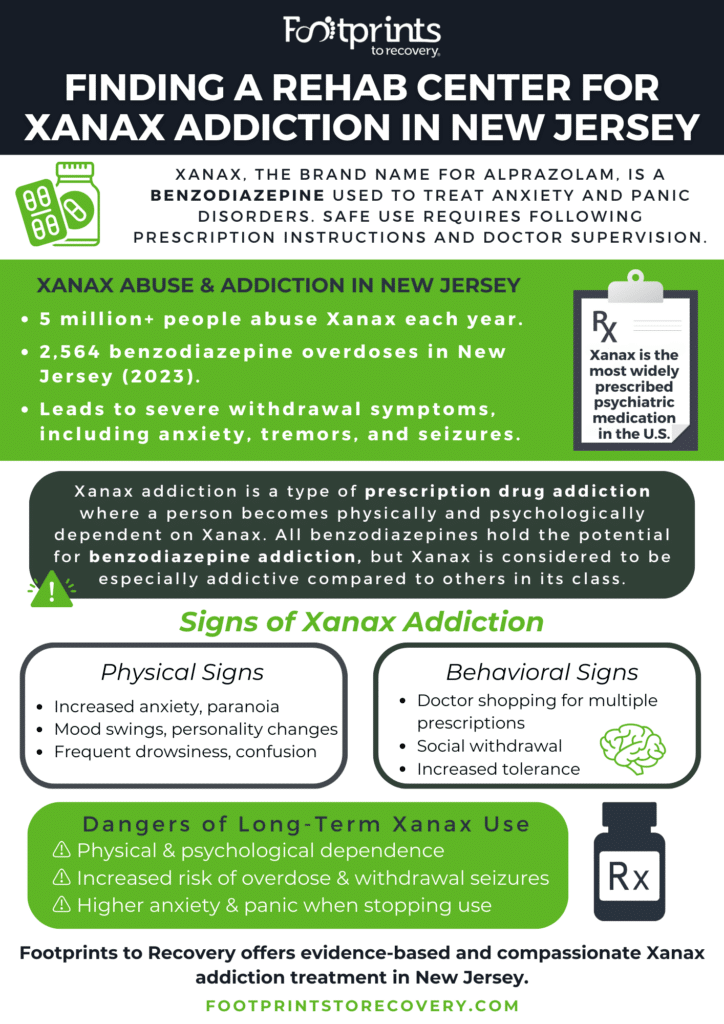
Over 48 million prescriptions for Xanax are written each year, making it the most prescribed psychiatric medication in the United States. The ease of obtaining it has led to it becoming a popular drug of abuse.
Xanax abuse is a major problem in the United States, with over five million people abusing it per year. When it comes to Xanax addiction in New Jersey, According to the New Jersey Substance Abuse Monitoring System, there were 2,564 benzodiazepine overdoses in the state in 2023.
If you are struggling with Xanax addiction, it’s essential to find an alcohol and drug rehab near you in Hamilton, New Jersey
What Is Xanax Addiction?
Xanax addiction is a type of prescription drug addiction where a person becomes physically and psychologically dependent on Xanax. Xanax dependence develops as the body and mind adapt to regular use, making it difficult to stop without professional help. All benzodiazepines hold the potential for benzodiazepine addiction, but Xanax is considered to be especially addictive compared to others in its class.
Why Is Xanax Addictive?
Benzodiazepines like Xanax act on the brain’s GABA receptors to produce feelings of relaxation and euphoria. While this mechanism makes Xanax effective for treating anxiety and panic disorders, it also contributes to its high potential for addiction.
There are a few reasons for that. First, it’s fast-acting. Xanax can be absorbed into the blood in as little as 15 minutes. This rapid relief can be highly reinforcing, especially for individuals experiencing acute anxiety or panic attacks. Repeated use can quickly lead to physical dependence, making it difficult to stop without experiencing withdrawal symptoms and highlighting the need for medical supervision during discontinuation.
It also has a short half-life, meaning it leaves the body quickly: anxiety and panic can return, sometimes more intensely than before (known as “rebound anxiety”). This can lead to individuals taking more frequent doses in order to maintain the calming effects. This pattern of use can result in Xanax misuse, increasing the risk of addiction and serious health complications. Xanax addiction in New Jersey and elsewhere is a result.
How Can I Tell if My Loved One in New Jersey is Using Xanax?
As tolerance and addiction develop, a variety of signs will make it apparent a person is dependent on Xanax in New Jersey.
When the drug is reduced or stopped, withdrawal symptoms can occur, including:
Severe anxiety
Irritability
Insomnia
Tremors
Seizures (in severe cases)
These symptoms can be so uncomfortable or dangerous that individuals continue taking Xanax to avoid them, perpetuating the cycle of use.
Behavioral signs of Xanax abuse may exhibit include:
Increased anxiety and paranoia
Mood swings
Changes in personality
Doctor-shopping
Neglecting responsibilities
Social withdrawal
Long-term Xanax misuse can also contribute to mental health problems such as depression, memory loss, and mood disturbances.
These signs often become more pronounced as Xanax addiction in New Jersey deepens, making early intervention crucial for recovery. If these signs are present, professional help from an addiction specialist or treatment center is strongly recommended, and it is important to seek proper medical guidance to ensure safe and effective treatment.
What Is Xanax Used For?
Xanax can be prescribed for anxiety and stress. Its calming effects on the central nervous system make it effective for specific mental health issues. Xanax is also prescribed for other mental health conditions such as depression and PTSD.
Below are its common medical uses:
Xanax for Anxiety Disorder
Xanax is often prescribed for generalized anxiety disorder (GAD), characterized by excessive, uncontrollable worry about various aspects of life, lasting for six months or longer. It works by enhancing GABA, which calms down the CNS. It’s fast-acting, often calming symptoms within 30 minutes to an hour.
Xanax for Panic Disorder
Xanax is FDA-approved for the treatment of panic disorder, particularly in individuals experiencing recurrent and unexpected panic attacks. It quickly alleviates the acute symptoms of a panic attack, such as intense fear, shortness of breath, or chest tightness.
Xanax for Insomnia
Though not specifically approved for insomnia, Xanax may be prescribed off-label for sleep disorders caused by anxiety. It induces relaxation by depressing CNS activity, making it easier to fall and stay asleep.
"*" indicates required fields
Fill out the form below and one of our admissions team members will reach out to you:
"*" indicates required fields
However, abrupt discontinuation of Xanax can result in severe insomnia, underscoring the importance of professional support during detox and withdrawal in New Jersey.
What Are the Dangers of Using Xanax Long-Term?
Using Xanax long-term can lead to significant health risks, including physical and psychological dependence, withdrawal complications, and Xanax addiction in New Jersey. While Xanax is effective for short-term relief of anxiety, panic disorders, or insomnia, extended use increases the potential for serious consequences.
Long-term Xanax use can also contribute to co-occurring mental health conditions, such as anxiety or depression, which may complicate recovery. Individuals with underlying mental health disorders are at increased risk for developing Xanax addiction and require integrated treatment approaches that address both substance use and mental health needs.
What Is Xanax Addiction Treatment in New Jersey Like?
Xanax addiction treatment in New Jersey involves a combination of therapy, medication, and professional support. A comprehensive treatment approach is used to address both the physical and psychological aspects of Xanax addiction, ensuring holistic care. Addiction treatment programs in New Jersey offer a range of treatment services, including evidence-based therapies, medication management, and ongoing support to promote long-term recovery. Personalized treatment plans are developed for each individual after a thorough assessment, ensuring the most effective path to recovery. Here’s what you can expect:
Xanax Detox
Because Xanax addiction is dangerous and potentially life-threatening, detox is essential. However, detox should always be conducted under medical supervision to ensure safety. But it has to be done carefully – quitting cold turkey could trigger rebound anxiety, higher blood pressure, terrifying hallucinations, and even seizures. Medically supervised detox programs are specifically designed to manage severe withdrawal symptoms and reduce health risks during the detoxification process.
Gradually reducing the dose of Xanax, rather than stopping abruptly, can help minimize these Xanax withdrawal symptoms. Some individuals may experience severe withdrawal symptoms, such as seizures, which can be life-threatening without proper care. This should always be done under the supervision of a healthcare professional.
Inpatient Treatment for Xanax
Inpatient treatment in New Jersey, also known as residential treatment, involves living at a treatment facility for 30 to 90 days. This type of treatment is intensive and is suitable for those with severe addiction or those who have not succeeded with outpatient treatment. Inpatient treatment takes place in a structured environment, with continuous medical monitoring provided. It offers a supportive setting for individuals to begin their recovery journey, ensuring they receive ongoing care and guidance throughout the process.
Outpatient Treatment for Xanax
Outpatient treatment allows individuals to live at home and maintain a regular daily routine, such as going to work or school while attending treatment sessions at a clinic or facility. Our outpatient programs include both standard outpatient program options and more structured levels of care, such as an intensive outpatient program (IOP), which provides additional support for those transitioning from inpatient treatment or needing a higher level of care. These programs can vary in intensity and are typically best for those with mild to moderate addiction or as a step down from inpatient treatment in New Jersey.
Therapies for Xanax Addiction Recovery in New Jersey
Access to therapy is one of the best reasons why rehab in New Jersey is a smart idea. For those seeking recovery from Xanax addiction in New Jersey, a range of therapeutic options is available, encompassing psychotherapies, holistic treatments, and specialized recovery programs. A variety of therapeutic modalities are incorporated as part of individualized treatment plans, ensuring that each person’s unique needs are addressed throughout their recovery journey.
Here’s an overview of each type:
Psychotherapies for Xanax Abuse in New Jersey
Cognitive Behavioral Therapy (CBT): CBT is a popular and effective treatment for substance abuse, including Xanax addiction. It helps individuals identify and change negative thought patterns and behaviors that contribute to their addiction.
Dialectical Behavior Therapy (DBT): Originally developed to treat borderline personality disorder, DBT has proven effective in substance abuse treatment. It focuses on teaching coping skills to manage stress, regulate emotions, and improve relationships. Group therapy is also an important part of addiction treatment, providing peer support and opportunities to develop coping skills in a collaborative setting.
Holistic Treatments for Xanax Abuse in New Jersey
Yoga and Meditation: These practices help manage stress and anxiety, common triggers for Xanax use. As holistic therapies, yoga and meditation are considered alternative treatment options that can complement traditional addiction therapies by promoting overall mental and physical well-being.
Acupuncture: Some treatment centers offer acupuncture as a complementary therapy and an alternative treatment option to help alleviate withdrawal symptoms and promote relaxation.
Nutritional Counseling: Proper nutrition supports overall health and helps balance neurotransmitters affected by substance abuse.
Art and Music Therapy: These therapies allow individuals to express themselves creatively, which can be therapeutic and help in processing emotions related to addiction.
Start Today
Footprints to Recovery offers research-based and compassionate Xanax addiction treatment in New Jersey. Xanax rehab is a crucial part of overcoming addiction to this commonly prescribed medication. Our treatment programs in New Jersey include unique levels of care like inpatient treatment, intensive outpatient care, and more so everyone can find the path to recovery from drug addictions that best suits their needs. The goal of our treatment is lasting recovery, supported by ongoing care and relapse prevention. Achieving long-term recovery often requires a combination of therapy, support, and sometimes medication-assisted treatment to address both addiction and any co-occurring mental health concerns.
Not all rehab centers are the same. Contact us today for a free consultation to learn more about the admissions process, meet our caring team, and begin your insurance verification. Take the first step towards a life free from substance abuse in New Jersey.
- FC;, M. D. L. (n.d.). Benzodiazepine use and misuse among adults in the United States. Psychiatric services (Washington, D.C.). https://pubmed.ncbi.nlm.nih.gov/30554562/
- Griffin, C. E., Kaye, A. M., Bueno, F. R., & Kaye, A. D. (2013). Benzodiazepine pharmacology and central nervous system-mediated effects. Ochsner journal. https://pmc.ncbi.nlm.nih.gov/articles/PMC3684331/
- Susman, J., & Klee, B. (2005). The role of high-potency benzodiazepines in the treatment of panic disorder. Primary care companion to the Journal of clinical psychiatry. https://pmc.ncbi.nlm.nih.gov/articles/PMC1076453/